Why Do I Wake Up at 3AM? The Real Reasons (and How to Fix It)
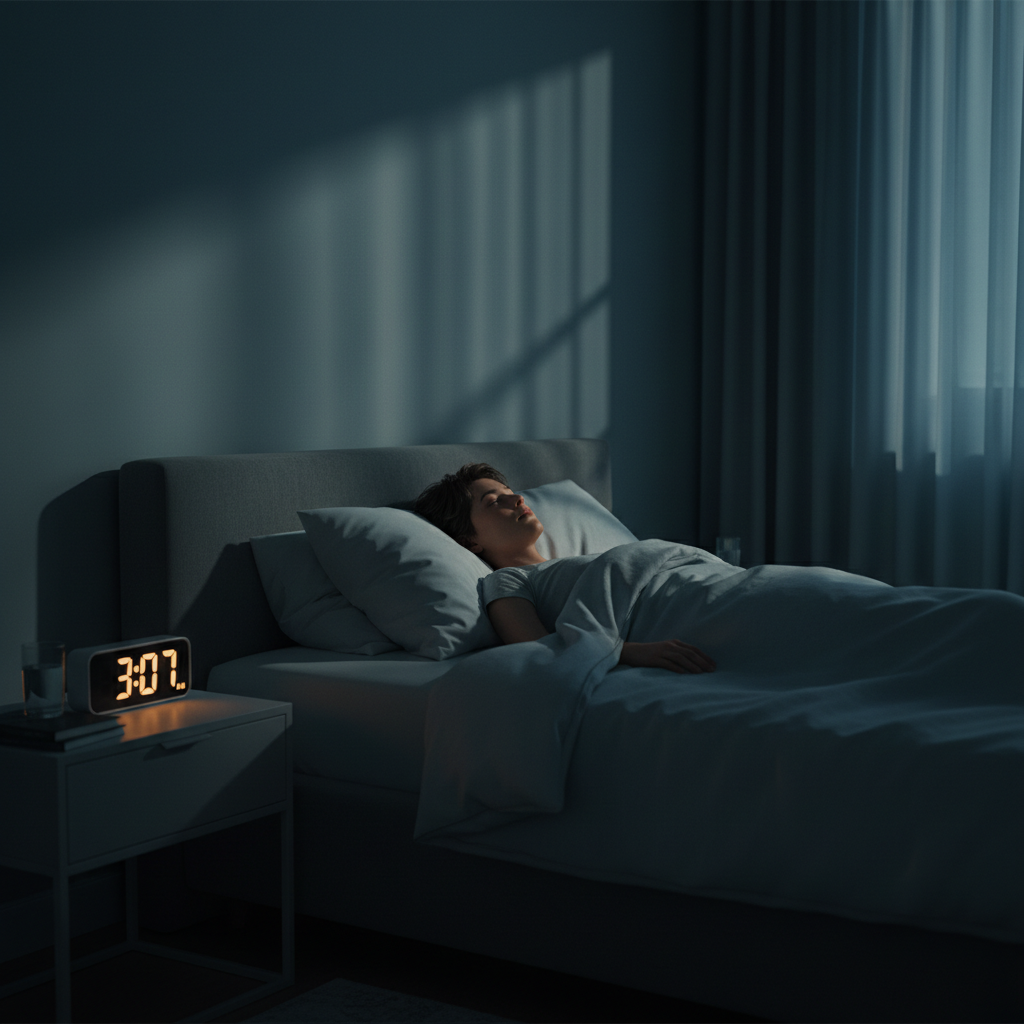
You fell asleep fine. But at 3:07 AM your eyes snap open, your mind immediately goes somewhere stressful, and getting back to sleep feels impossible. The next morning you're running on fumes — not because you didn't get enough hours, but because those hours were fractured.
If this is your pattern, you're in good company. Research shows that waking between 2 and 4 AM is one of the most common sleep complaints in adults over 30. And unlike trouble falling asleep, this type of waking often gets dismissed as "just anxiety" or "getting older" — when in reality, it has specific, addressable causes.
Here's what's actually happening when you wake at 3 AM, why certain factors make it worse, and what to do differently starting tonight.
Why 3 AM Is the Problem Hour
Your sleep isn't a single long stretch. It runs in 90-minute cycles, each composed of light sleep, deep sleep, and REM sleep. The proportions shift across the night: the first half of the night skews toward deep (slow-wave) sleep, while the second half shifts heavily toward REM.
By 3 AM — roughly the midpoint of a 10 PM to 6 AM window — you've finished most of your deep sleep. From here until your alarm, your sleep is lighter, with longer REM periods and more brief micro-awakenings that are completely normal. Most people don't remember these, because under ideal conditions your brain crosses the arousal threshold without fully waking.
The problem is that multiple factors converge at this hour to make those transitions stickier — meaning you do wake up fully, your brain locks onto something stressful, and re-entry becomes a fight.
The Five Most Common Causes
1. Cortisol Starting to Rise
Cortisol — your primary stress and alertness hormone — follows a daily rhythm. It bottoms out around midnight and begins rising between 3 and 4 AM in preparation for waking. This is normal. But if you're under significant stress, your cortisol baseline is elevated, meaning that early-morning rise is more pronounced. The result: your brain gets pulled from light sleep into full wakefulness before your alarm.
This is especially common during periods of work pressure, financial stress, or major life transitions. You may notice it correlates with "bad weeks" — the more stressed you are during the day, the more likely you are to snap awake at 3 AM.
2. Blood Sugar Dropping
For people who eat an early dinner or last meal before 7 PM, blood sugar can dip into a low range by 3 AM. Your body responds by releasing adrenaline — another alerting signal — to trigger the liver to release stored glucose.
Even mild hypoglycemia at night is enough to surface you from sleep. The giveaway: if you wake up feeling slightly shaky, heart racing, or immediately hungry, blood sugar is a likely contributor.
A small, protein-and-fat-containing snack 60–90 minutes before bed — like a small handful of almonds or a piece of cheese — can prevent this for some people. Avoid high-sugar snacks, which spike and crash.
3. Alcohol
This is probably the most common and underappreciated cause. Alcohol's sedative effect is metabolized within 3–5 hours of drinking. For someone who has two drinks at 9 PM, the metabolism completes around 2–3 AM — precisely when you're in lighter sleep phases.
The result: alcohol withdrawal (even at low doses) activates the sympathetic nervous system, causing fragmented sleep, vivid dreams, and early waking. This is a pharmacological effect, not anxiety. Many people who feel they "sleep fine after a couple drinks" are unknowingly trading quantity for quality.
If you drink regularly and wake at 3 AM consistently, this is the first variable to test. Try a 2-week alcohol-free experiment. The improvement in sleep maintenance is often striking.
4. Body Temperature Rising
Your core body temperature drops during sleep — this is part of the sleep architecture. By the second half of the night, your body naturally starts rewarming in preparation for waking. If your bedroom is too warm, or you're under too-heavy bedding, this thermal rebound happens earlier and more sharply, triggering arousal.
Research is consistent: the optimal bedroom temperature for sleep maintenance is 65–68°F (18–20°C). Even a two-degree increase raises middle-of-the-night wake-ups meaningfully.
If you sleep with a partner who runs warm, you generate each other's heat. If you're using a synthetic foam mattress, body heat accumulates in the foam. Natural latex, innerspring, or hybrid constructions tend to sleep cooler. A breathable, temperature-regulating mattress like the Luxerion Hybrid Latex Mattress→ from Latex Mattress Factory allows airflow that foam suppresses — particularly relevant for people who consistently run hot or live in warm climates.
5. Anxiety and Rumination
Even without a clinical anxiety disorder, mental arousal at the transition point between deep and REM sleep is a major driver of 3 AM waking. The prefrontal cortex — your logical, calming brain center — is suppressed during sleep. The amygdala, your emotional threat-detector, is not. This makes whatever you wake to think about feel more urgent and more catastrophic than it actually is at 11 AM.
This is why the mental content of 3 AM feels different from daytime worry: you don't have full access to perspective and regulation. You're running on amygdala alone.
Understanding this is practically useful: it means you can discount the urgency of whatever your brain serves up. Nothing about a 3 AM worry requires you to think through it at 3 AM. The problem is that knowing this doesn't always stop the spiral.
The 3 AM Wake-Up Protocol
What you do in the first 3–5 minutes after waking largely determines whether you fall back asleep in 15 minutes or lie awake for 90.
Step 1: Don't check the time. This is critical. Looking at the clock activates calculation ("I have 3 hours and 22 minutes left") that wires your brain into problem-solving mode. Turn the clock face away from the bed, or put your phone in another room. A cheap alarm clock with no screen glow solves this entirely.
Step 2: Don't check your phone. Even with screen brightness turned down, the visual stimulation of your phone triggers dopamine pathways and extends wakefulness by 20–30 minutes on average. This includes checking "just the time" on your lock screen.
Step 3: Engage your parasympathetic nervous system. The goal in the first few minutes is to lower your arousal state below the re-sleep threshold. The two fastest tools:
- 4-7-8 breathing: Inhale 4 counts, hold 7, exhale slowly for 8. The extended exhale activates the vagus nerve and slows heart rate. Two or three cycles is enough to take the edge off.
- Body scan: Starting at your feet, consciously relax each muscle group upward. Pay particular attention to your jaw, shoulders, and hands — common locations for stress holding.
Step 4: If thoughts surface — cognitive shuffle. Don't negotiate with the thoughts. Don't try to "solve" whatever your brain latched onto. Instead, use cognitive shuffling: pick a random, neutral word and build brief mental images for each letter. MARKET: mushroom, alligator, rainbow, kite, elephant, telescope. The deliberate randomness mimics the hypnagogic state your brain needs to re-enter sleep.
Step 5: The 20-minute rule. If after 20 minutes you're still fully alert, get out of bed. Go to a dimly lit room. Read something light (a physical book, not a screen). Do not do anything stimulating. Return to bed when you feel drowsy. This is stimulus control — it prevents your bed from becoming mentally associated with wakefulness.
If this is your ongoing pattern, the 7-Day Sleep Reset Protocol walks through a structured approach to fixing fragmented sleep — covering bedroom temperature, cortisol management, pre-bed rituals, and the specific techniques that help people who wake at 3 AM get back to consolidated sleep. It's $17 and backed by a 60-day guarantee.
Tracking Your Pattern to Find the Cause
Waking at 3 AM is almost always one of a handful of specific causes — but identifying yours requires data. Vague sleep awareness ("I feel tired a lot") is nearly useless for diagnosis. Specific tracking makes interventions testable.
Keep a simple sleep log for two weeks. Note: what time you woke, any stressors that day, what you ate and drank (especially alcohol), bedroom temperature if you can measure it, and what you were thinking about when you woke. Patterns often emerge within a week.
For more objective data, a wearable tracker like the Oura Ring Gen 3 provides heart rate variability, skin temperature, and detailed sleep stage breakdown — including when you woke and for how long. This data is actionable: if your HRV tanks every night you drink, the alcohol-sleep connection becomes hard to ignore. If your skin temperature spikes at 3 AM on warm nights but not cool ones, temperature management becomes your priority.
A smart tracker doesn't fix anything on its own, but it shifts your approach from guessing to testing. That difference compounds.
When to Take It More Seriously
Occasional 3 AM waking — a few times a month — is normal and doesn't warrant intervention beyond lifestyle hygiene. But if you're waking at 3 AM three or more nights per week and feel significantly unrefreshed the next day, that's clinically meaningful.
Persistent sleep maintenance insomnia that doesn't respond to lifestyle changes warrants a conversation with a doctor. The priorities are to rule out:
- Sleep apnea: Obstructive sleep apnea causes arousals throughout the night, often concentrated in REM sleep. If you snore, gasp, or your partner reports breathing pauses, this is the first thing to investigate. An at-home sleep study can diagnose it without an overnight lab stay.
- Restless legs syndrome (RLS): Uncomfortable sensations in the legs during rest — particularly evenings and early morning hours — can fragment sleep in ways that feel like anxiety waking.
- Perimenopause / menopause: Hormonal changes dramatically increase nighttime awakenings in women 40-55. Hot flashes can trigger arousal that feels identical to anxiety waking. This is physiological and responds to specific interventions.
CBT-I (Cognitive Behavioral Therapy for Insomnia) is the clinical gold standard for chronic insomnia of any kind. It addresses the behavioral and cognitive patterns that perpetuate sleep problems, and it works. Research consistently shows it outperforms sleep medications for long-term outcomes, without the dependency risk.
The Compounding Cost
A single night of 3 AM waking is unpleasant. A month of it is damaging.
Sleep fragmentation — even when total sleep hours look adequate — impairs executive function, emotional regulation, immune response, and cardiovascular health at measurable levels. If you're getting 7 hours but that sleep is broken, you're functionally sleep-deprived.
The brain also develops conditioned anxiety around 3 AM: you've woken there often enough that your brain starts to expect it, creating a self-reinforcing pattern. This is why breaking the cycle requires a more deliberate approach than just "trying harder to sleep." The 7-Day Sleep Reset Protocol is designed exactly for this: it's a structured reset rather than a single tip, built on sleep restriction and stimulus control — the two components of CBT-I that show the clearest results.
The good news is that sleep maintenance problems are among the most treatable forms of insomnia when the causes are addressed systematically. Most people see meaningful improvement in 2–4 weeks of consistent application.
Frequently Asked Questions
Why do I wake up at exactly 3AM every night?+
Most 3AM wake-ups happen because you have finished your deep sleep and entered lighter REM sleep phases. At this hour, cortisol begins rising, blood sugar may dip, and alcohol metabolism peaks — all of which can push you over the arousal threshold into full wakefulness. The time feels consistent because sleep architecture is predictable.
Is waking at 3AM a sign of anxiety?+
It can be, but anxiety is only one of five common causes. Cortisol rhythm, blood sugar drops, alcohol metabolism, and bedroom temperature are often just as responsible. Identifying your specific trigger — by keeping a simple sleep log — leads to much more effective solutions than treating everything as anxiety.
How do I stop waking up at 3AM?+
Start by testing the most common causes one at a time: cut alcohol for two weeks, lower your bedroom temperature to 65-68F, have a small protein snack before bed, and practice the 3AM wake-up protocol (no clock-checking, 4-7-8 breathing, cognitive shuffling). Most people identify the cause within 2 weeks of systematic testing.
Should I get out of bed if I wake at 3AM?+
Only if you have been awake for more than 20 minutes and feel fully alert. If so, get up, go to a dim room, read something light, and return when drowsy. This is stimulus control — it prevents your brain from associating bed with wakefulness. If you are drowsy but awake, stay in bed and use a relaxation technique first.
When should I see a doctor about waking at 3AM?+
If you are waking three or more nights per week and feel significantly unrefreshed despite adequate total sleep hours, it is worth investigating. Priority is to rule out sleep apnea (especially if you snore or gasp), restless legs syndrome, or hormonal changes from perimenopause. CBT-I therapy is the most effective long-term treatment for chronic sleep maintenance insomnia.
Keep Reading
Sleep Smarter Editorial Team
Our editorial team researches and writes evidence-based sleep content grounded in peer-reviewed science. All articles reference established sleep research from sources including the NIH, AASM, and Sleep Foundation.