Cognitive Shuffling: The Viral Bedtime Trick That Quiets a Racing Mind
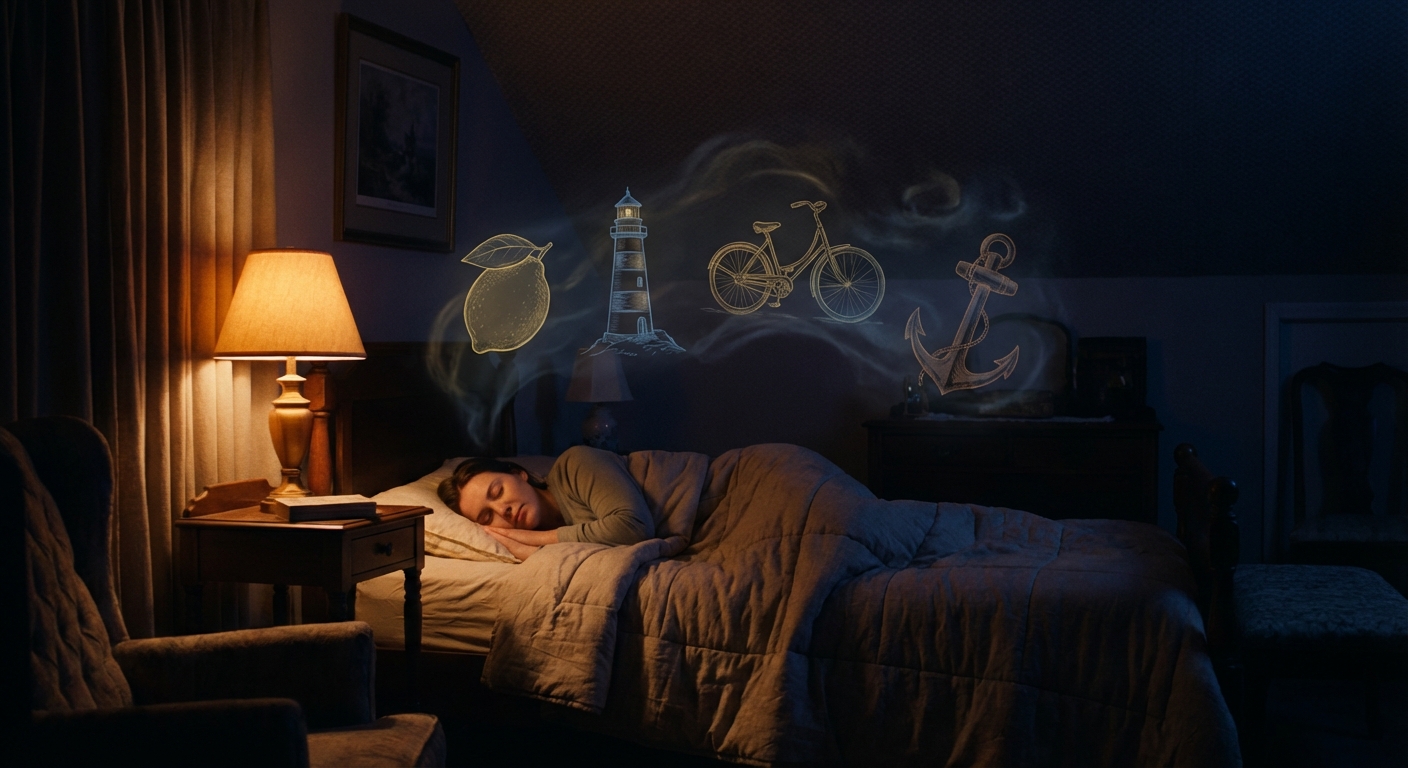
It's midnight. You're exhausted. And your brain has decided that now — right now — is the perfect time to replay that awkward thing you said in 2014, mentally rewrite your grocery list, and catastrophize tomorrow's meeting. Sound familiar? You're not broken. You're just experiencing one of the most common obstacles to falling asleep: a mind that refuses to clock out.
The frustrating part is that trying harder to sleep only makes things worse. The more you monitor yourself ("Am I asleep yet? Why am I not asleep?"), the more alert your brain becomes. It's a trap that millions of people fall into every single night.
But researchers have been quietly working on a fix — and it went viral for good reason.
What Is Cognitive Shuffling?
Cognitive shuffling is a sleep-onset technique developed by Dr. Luc Beaudoin, a cognitive scientist at Simon Fraser University in British Columbia. The core idea is deceptively simple: instead of trying to clear your mind or count sheep, you deliberately think of random, emotionally neutral words and then visualize unrelated images associated with each letter.
Here's why that matters. As your brain transitions from wakefulness to sleep, it naturally enters a state called somnolence — a kind of fuzzy, semi-conscious stage where your thoughts become loose, illogical, and disconnected. You might picture a fish riding a bicycle, or a purple toaster talking to a cloud. These fragmented, nonsensical micro-images are the brain's way of powering down.
The problem? Coherent, meaningful thinking — worrying about work, replaying an argument, planning tomorrow — signals to your brain that you're still in problem-solving mode. It delays the somnolent state. Cognitive shuffling works by artificially mimicking the brain's natural sleep-onset chatter, essentially tricking it into thinking it's already on the way out.
Beaudoin published his research in a 2020 paper titled "Somnolent Information Processing" and developed a companion app called MySleepButton. But the concept recently exploded into mainstream awareness, with BBC Future, The Washington Post, and Inc. magazine all covering it during World Sleep Day week in March 2026 — and Google Trends showing the term spiking in real time.
The Science Behind Why It Works
To understand why cognitive shuffling is effective, it helps to understand what your brain is actually doing wrong when you lie awake.
When you're trying to fall asleep but mentally rehearsing, planning, or worrying, your brain is producing high-frequency, organized neural activity — the same kind it uses for executive function and problem-solving. This activity suppresses the neural quieting process that initiates sleep.
Dr. Beaudoin's insight was that the brain doesn't just need less activity to fall asleep — it needs disorganized activity. Random, emotionally neutral imagery doesn't trigger the arousal centers the way goal-directed thinking does. It mimics the hypnagogic state (the transitional phase between wakefulness and sleep) rather than competing with it.
A related concept is cognitive deactivation — the idea that sleep onset is blocked not by the amount of thought, but by the meaningfulness of it. Worry and planning are meaningful. A mental image of a flamingo standing in an airport is not. That's exactly the point.
This also helps explain why techniques like progressive muscle relaxation and body scans work — they redirect attention away from narrative thought. Cognitive shuffling takes that principle further by actively generating the kind of semi-random chatter the sleeping brain naturally produces.
How to Do Cognitive Shuffling (Step-by-Step)
The basic technique takes about 30 seconds to learn and doesn't require any equipment, app, or preparation. Here's exactly how to do it:
Step 1: Choose a random word. Pick a word that has no emotional charge — nothing to do with your to-do list, your relationships, or your worries. Something mundane works perfectly. Examples: mustard, lantern, bicycle, suitcase, pebble.
Step 2: Visualize an object for each letter. Take the first letter of your word and picture an object that starts with it. Don't rush — hold the image for a few seconds. Then move to the second letter, and so on.
For example, if your word is LANTERN:
- L — Lemon (picture it: yellow, waxy, sitting on a countertop)
- A — Anchor (heavy, rusted, sitting on the ocean floor)
- N — Napkin (white, folded, on a restaurant table)
- T — Turtle (slowly crossing a garden path)
- E — Envelope (cream-colored, slightly crumpled)
- R — Rainbow (arching over a foggy mountain)
- N — Notebook (spiral-bound, open to a blank page)
Step 3: If your mind wanders, gently return. If a coherent thought sneaks back in — an email you need to send, a conversation you're replaying — don't fight it. Just notice it, and return to your visualization. Pick a new word if you need to restart.
Step 4: Repeat until you're asleep. Most people report falling asleep before they finish two or three words. The randomness and emotional neutrality of the imagery prevents the brain from assembling any coherent narrative — and that's when sleep slips in.
Variations That Work Just as Well
If the letter-by-letter approach feels too structured at first, there are simpler variations:
- The Supermarket Walk: Mentally stroll through a supermarket and picture random items on each shelf. Crackers. Mustard. A balloon tied to the cereal aisle. Keep moving, keep it random.
- The Animal Alphabet: Picture a different animal for each letter of the alphabet. No logic required — a zebra eating a pizza is perfect.
- Random Object Mode: Simply let random objects appear in your mind's eye without any structure. A park bench. A coffee mug. A fishing rod. A stapler. Let each one appear and dissolve without following any thread.
The key across all variations is the same: random, neutral, and non-sequential. The moment your images start forming a story or connecting to real life, your brain snaps back into problem-solving mode.
Ready to pair this technique with an optimized sleep schedule? Use our free Sleep Reset Calculator to find your ideal bedtime and wake time — then try cognitive shuffling the moment your head hits the pillow. The combination is powerful.
Pair It With Your Sleep Timing
Cognitive shuffling works best when you're actually ready to sleep — not just lying in bed too early hoping to knock out. If you're consistently in bed more than 20-25 minutes before sleep comes, your brain starts associating your bed with wakefulness, which is the first step toward chronic insomnia.
The sweet spot is timing your sleep attempt to align with your natural sleep pressure — the build-up of adenosine in the brain that makes you genuinely sleepy. Our Sleep Reset Calculator can help you find your personal sleep window based on your chronotype and wake time goals.
Once you're in bed at the right time, cognitive shuffling gives your brain the off-ramp it needs to cross from tired-but-awake into actual sleep.
What Else Can Support Faster Sleep Onset?
Cognitive shuffling addresses the cognitive side of delayed sleep onset. But if your nights are consistently difficult, it's worth layering in environmental and physiological support.
Magnesium glycinate is one of the most evidence-backed supplements for sleep quality. Unlike other forms of magnesium, the glycinate form is highly bioavailable and has a calming effect on the nervous system — without the digestive side effects of magnesium citrate or oxide. Clinical research suggests it can reduce sleep onset latency and improve sleep efficiency, particularly in people who are deficient (which, due to soil depletion, is most of the Western world).
We recommend starting with 200–400mg taken 30–60 minutes before bed. Doctor's Best High Absorption Magnesium Glycinate is a well-reviewed option that checks the bioavailability box without unnecessary fillers.
Sleep surface temperature is another underrated factor. Your core body temperature needs to drop by 1–3°F to initiate sleep, and the materials your face and neck rest on play a bigger role than most people realize. Synthetic pillowcases trap heat and can subtly interrupt the cooling process. If you run hot at night, a temperature-regulating silk pillowcase — like the Promeed Luxgen Silk Pillowcase→ — can make a measurable difference. The Luxgen is OEKO-TEX certified and uses a moisture-wicking weave designed specifically for hot sleepers. Paired with a cool room (65–68°F is the research-backed sweet spot), it creates the thermal conditions your brain needs to make the transition.
Who Benefits Most From Cognitive Shuffling?
The technique isn't equally useful for every type of sleeper. It's particularly effective for:
Overthinkers and ruminators. If your mind tends to spin through problems, conversations, or plans the moment you lie down, cognitive shuffling directly interrupts that loop. The randomness is the antidote to narrative.
People with sleep anxiety. Worrying about not sleeping is one of the most common drivers of insomnia — and cognitive shuffling short-circuits the monitoring process before it can escalate.
Those who wake during the night. Middle-of-night waking often involves the same mental-activation problem as initial sleep onset. Cognitive shuffling can be just as effective at 3 AM as it is at bedtime.
Readers and visual thinkers. If you naturally think in pictures and engage easily with visualization, the technique tends to click faster.
It's less immediately effective for people dealing with underlying sleep disorders like sleep apnea or restless leg syndrome — those have physiological drivers that no mental technique can override. If you suspect a structural issue, getting a sleep study is worth the effort.
Frequently Asked Questions
How long does it take to work? Most people who respond to the technique fall asleep within 5–15 minutes of starting. Some report results the first night; others need a few nights to get the hang of it. If you're still awake after 30 minutes, get up, do something calm in dim light for 10–15 minutes, and try again.
Does it work for everyone? No sleep technique works for everyone. Studies on cognitive shuffling show strong results for people with psychophysiological insomnia (the kind driven by mental hyperarousal), but less evidence exists for people with circadian disorders or sleep-disordered breathing.
Is there an app? Yes — Dr. Beaudoin's MySleepButton app generates random words for you, which removes the "what word do I pick?" decision. But honestly, any random word works. A dictionary, a grocery receipt, the label on your water bottle — all fair game.
Can I combine it with other techniques? Absolutely. Cognitive shuffling pairs well with progressive muscle relaxation (do a body scan first, then start shuffling as you relax), 4-7-8 breathing (use the breathing to calm your nervous system, then transition to imagery), and sleep restriction therapy if you're working with a CBT-I protocol.
What if I keep thinking of emotionally charged images? That's common at first. If a word triggers meaningful associations (your boss's name, a word connected to a stressful memory), just switch to a different word. The goal is neutral — something you have no feelings about whatsoever.
Cognitive shuffling won't solve every sleep problem, and it's not magic. But for the millions of people whose main obstacle to sleep is a brain that won't stop talking — it's one of the most elegant, research-supported tools available. It's free, it has no side effects, and it works with your brain's own sleep machinery rather than against it.
Try it tonight. Pick a word. Picture a lemon.
Frequently Asked Questions
How long does cognitive shuffling take to work?+
Most people who respond to the technique fall asleep within 5–15 minutes of starting. Some report results the first night; others need a few nights to get the hang of it. If you're still awake after 30 minutes, get up, do something calm in dim light for 10–15 minutes, and try again.
Does cognitive shuffling work for everyone?+
No sleep technique works for everyone. Cognitive shuffling shows strong results for people with psychophysiological insomnia (the kind driven by mental hyperarousal), but less evidence exists for people with circadian disorders or sleep-disordered breathing.
Is there a cognitive shuffling app?+
Yes — Dr. Beaudoin's MySleepButton app generates random words for you, removing the "what word do I pick?" decision. But any random word works: a dictionary, a grocery receipt, or the label on your water bottle are all fair game.
Can I combine cognitive shuffling with other sleep techniques?+
Absolutely. It pairs well with progressive muscle relaxation (do a body scan first, then start shuffling), 4-7-8 breathing (calm your nervous system first, then transition to imagery), and sleep restriction therapy if you're working through a CBT-I protocol.
What if I keep thinking of emotionally charged images?+
That's common at first. If a word triggers meaningful associations — your boss's name, something connected to a stressful memory — just switch to a different word. The goal is emotional neutrality: something you have no feelings about whatsoever.
Keep Reading
Sleep Smarter Editorial Team
Our editorial team researches and writes evidence-based sleep content grounded in peer-reviewed science. All articles reference established sleep research from sources including the NIH, AASM, and Sleep Foundation.